>> Supporting Resistance is supporting Education <<
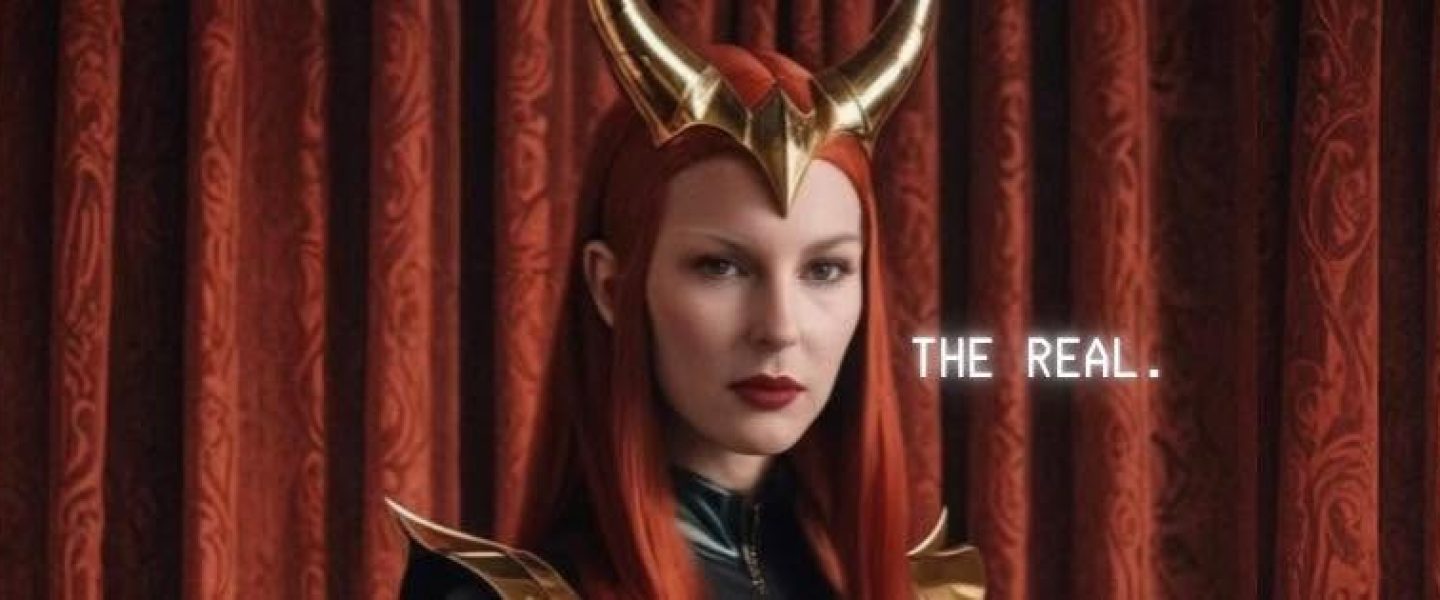
“No wonder so many gallery owners fear AI because the machine doesn’t imitate, it exposes. This isn’t just my installation, it’s a confession in cold-light. The algorithm doesn’t copy me, it reads my mind, my knowledge, and reveals what’s dark and intense within. Maybe it’s time we rethink what deserves walls, yes; schools, hospitals, and homes before galleries. Until then, art can live anywhere.” ― Shirin Bolourchi about: “Dark and Intense Inside” her AI-generated installation
In 2015, Shirin founded the Meshki Collective, a research-driven, interdisciplinary platform that curates immersive environments aimed at engaging audiences in layered aesthetic and intellectual experiences. Through the integration of video, sculpture, photography, wall painting, and diverse material practices, the Collective interrogates intersections between philosophy, realpolitik, political theory, and post-revolutionary design methodologies. Centered on a critical examination of artificial intelligence as an inherently rhetorical and ideologically embedded system, the Meshki Collective’s projects articulate Shirin’s sustained engagement with the cultural, ecological, and political urgencies of the contemporary moment. Her work approaches AI not as a neutral or purely technical apparatus, but as a discursive and operational force that shapes knowledge production, mediates power, and reproduces or challenges dominant global narratives. Through this framework, she interrogates pressing issues including climate change, peace-building, human rights, international justice, and social and economic equity, emphasizing the ways in which emerging technologies both reflect and intensify existing structural inequalities.
Shirin Bolourchi was born on icy December in Tehran-Iran. She is a Kurdish-Irani- an-American Visual Artist, Independent Curator, Writer, Poet and Blogger. Presently, she is living and working in an exile. After College, Shirin applied to Tehran Sooreh Art University and was admitted to The School of Dramatic Arts. She was graduated with her BFA Degree in Puppet Theater Directing. Following her education, she immigrated to Canada and later to the United States Of America to continue her Post-Graduate in Fine Arts. She received her MFA (Master in Fine Arts) from Otis College of Art and Design in Los Angeles.
Her work has been exhibited internationally. Notable exhibitions include the Global Elite Art & Academic Exchange at the Taoyuan Exhibition Center in Taiwan; “Synesthesia Immune” at Gallery 51, Massachusetts College of Liberal Arts; the online solo exhibition “Unauthorized SFMOMA Show #647” at the San Francisco Museum of Modern Art; the “Artists in Isolation” series in Venice, California; and “Meshki: Royal Black, Potato Sacks, i.e., Meaningmization” at Bolsky Gallery in Los Angeles.
War is the deadliest performance act mankind has invented since its creation on this planet. As a child born on an icy December morning in Tehran-Iran, in the midst of the Iran-Iraq war, as bombs fell on the city. I carry this burden with me, in my nightmares and my lens as an artist; from beautifully framed faces of “martyrs” in the Zahra’s Heav- en (Tehran’s main cemetery) to the constant broadcast marches of teenagers in military outfits, adorned with “Ya Hossein”(1) bandanas. These were amongst faces of identity that surrounded my childhood, as a woman, in a post-revolutionary Iran.
While being surrounded by influential works of masters such as David Lynch and Philip Glass, I was in pursuit of avenues of expression, not only as Iranian but also as a fe- male artist. As my modes of expression – theater, installation and video art, photogra- phy, writing and blogging – were shaped as a result of growing up in a constant moving landscape of a society in turmoil.
After College, I moved forth to receive my B.F.A. in Theater, from Tehran’s Sooreh Insti- tute of Art (school of Drama), where I honed down my skills in inter-disciplinary forms of expression. In response to personal and cultural challenges on the path of adapting to the changing socio-political environment in Iran, I initiated numerous independent projects. Amongst others “Self Installation” is a series started in Tehran where I ex- plored a new perspective and modes of vision towards my environment and the landscape in a state of constant change – which continues to the present day. The unique educational experience within the interdisciplinary art of theater only deepened my thirst for fur- ther explorations.
However it was shortly after, that I was faced with watching army tanks in streets of Teh- ran, turning their guns into the protesters, where I found myself being hunted for daring to ask for my own right as a human, as a citizen, and as woman, during the uprising known as The Iranian Green Movement (2) in Iran. Thus I had no choice but to leave my birth land, and immigrate to Canada – perhaps amongst the hardest things any human has to endure.
Hence the second phase of my artistic exploration was born: identity within the sphere of an immigrant. Immigration – fundamentally a process of deconstruction and reconstruction of the self – became a lens through which I created my work. Inspired by Isa Genzken and Anish Kapoor, on opposing ends of the spectrum, I began to explore a contrasting spectrum of presence: internal and external perspectives, in the form of video art, characterized by the developing technology of the mobile phone-camera. The resulting series of short instances documented a self-mediated experience, approaching every instance of reality as a platform of performance.
At this juncture in my life, I want to urge to move beyond my previous artistic practice and engage in a much more in depth exploration of human’s identity however in this phase, my perspective is built not only as an immigrant, but more specifically as an Kurdish-Ira- nian-American female artist, transplanted into a 21st century post-digital western soci- ety. Furthermore I am aiming to imagine a more human digital future where contributing to social justice would shift the current narrative of our digital future.
For “ Philosophical concepts that might give shape to ideas and cohere positions of agency and interventions that wouldn’t have been otherwise possible.”

